My Favorite Lemon Curd
/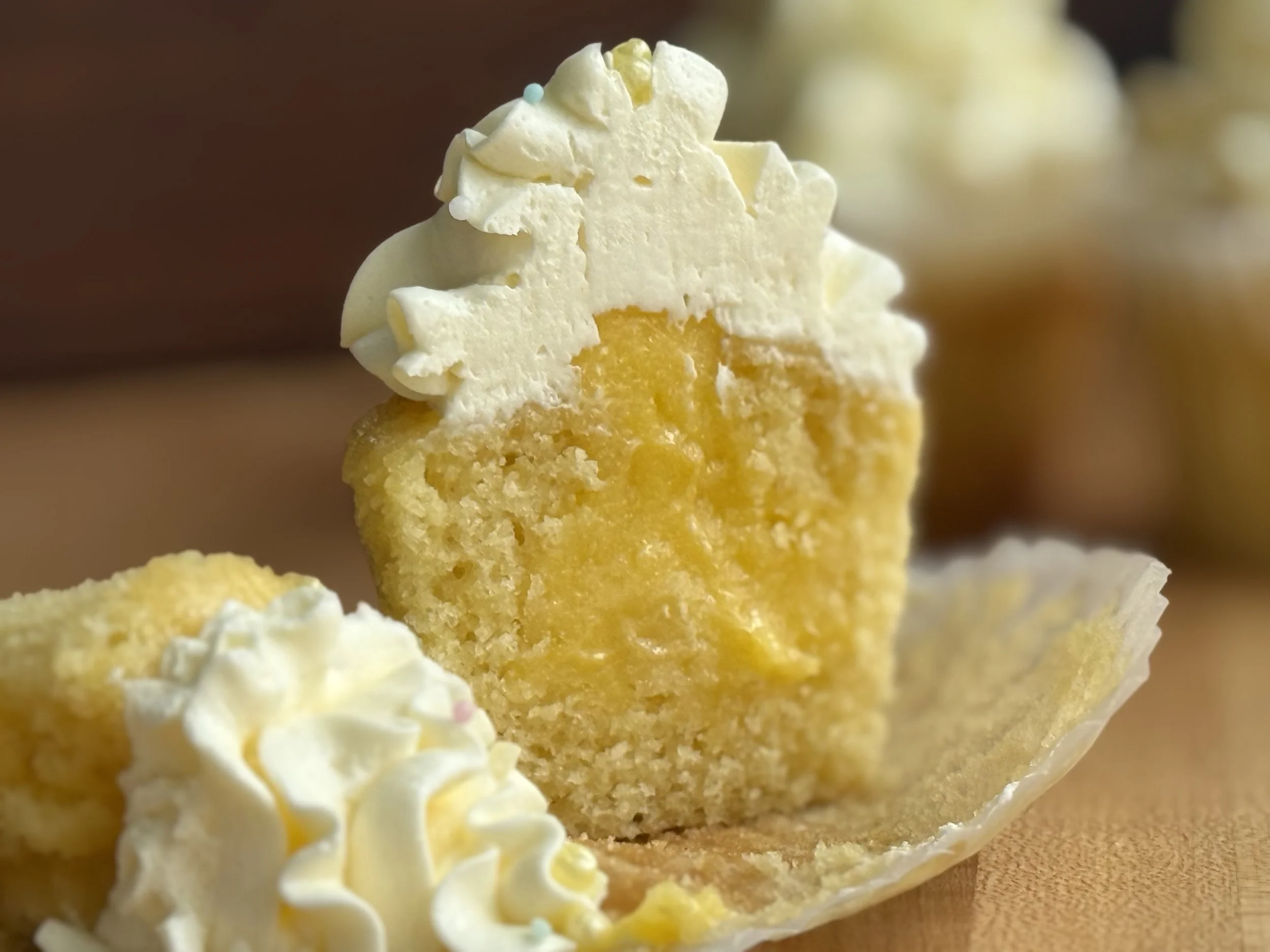
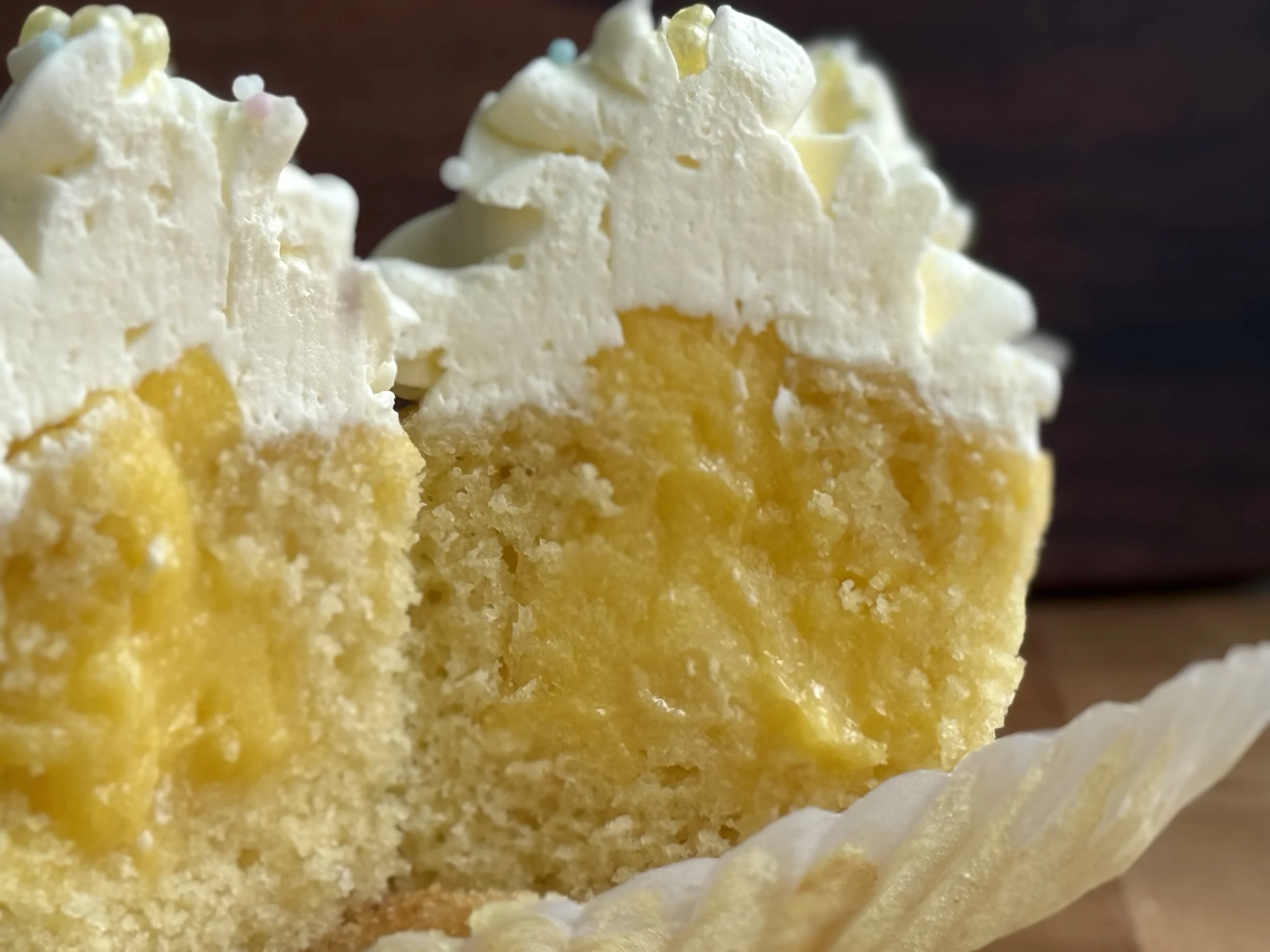
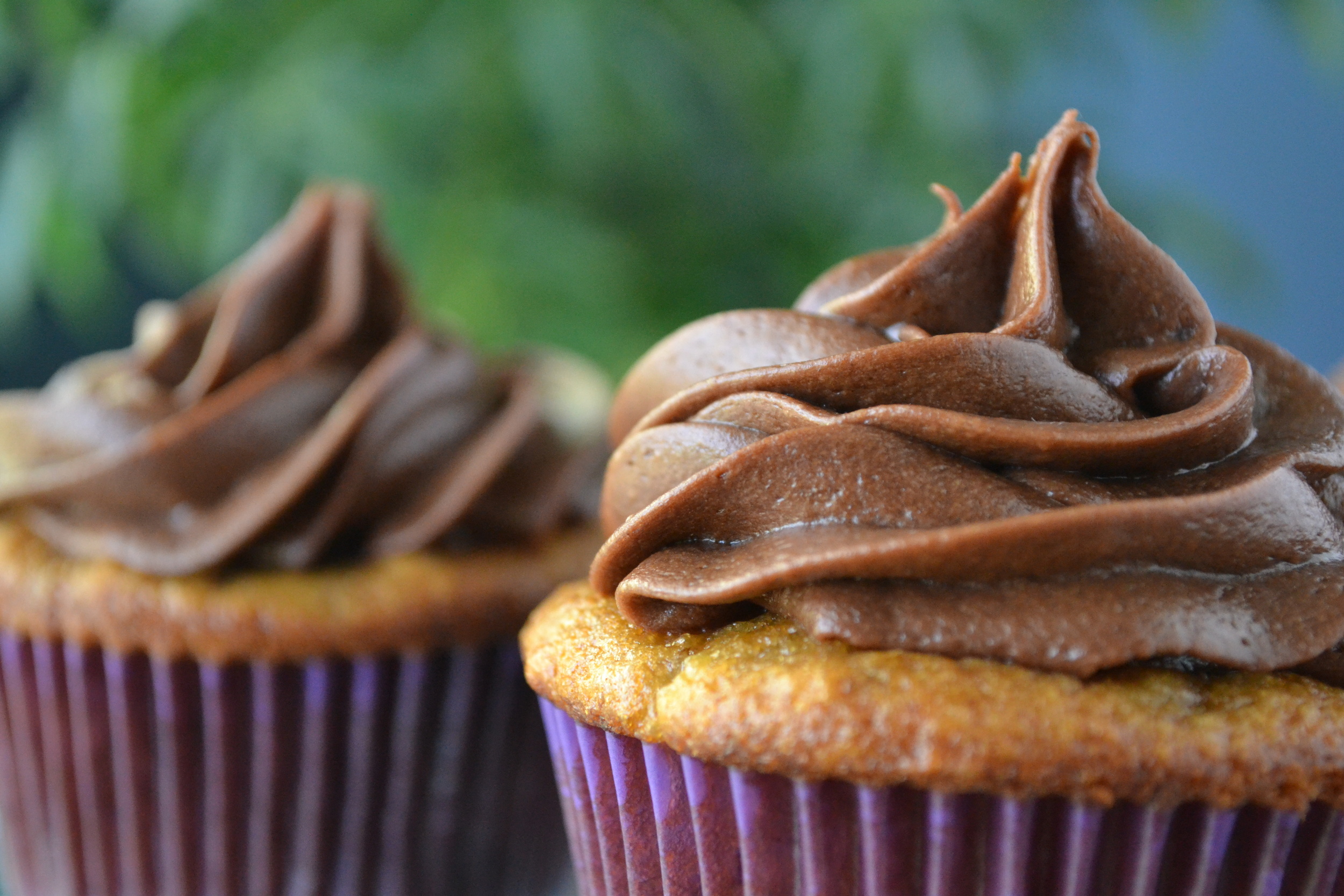
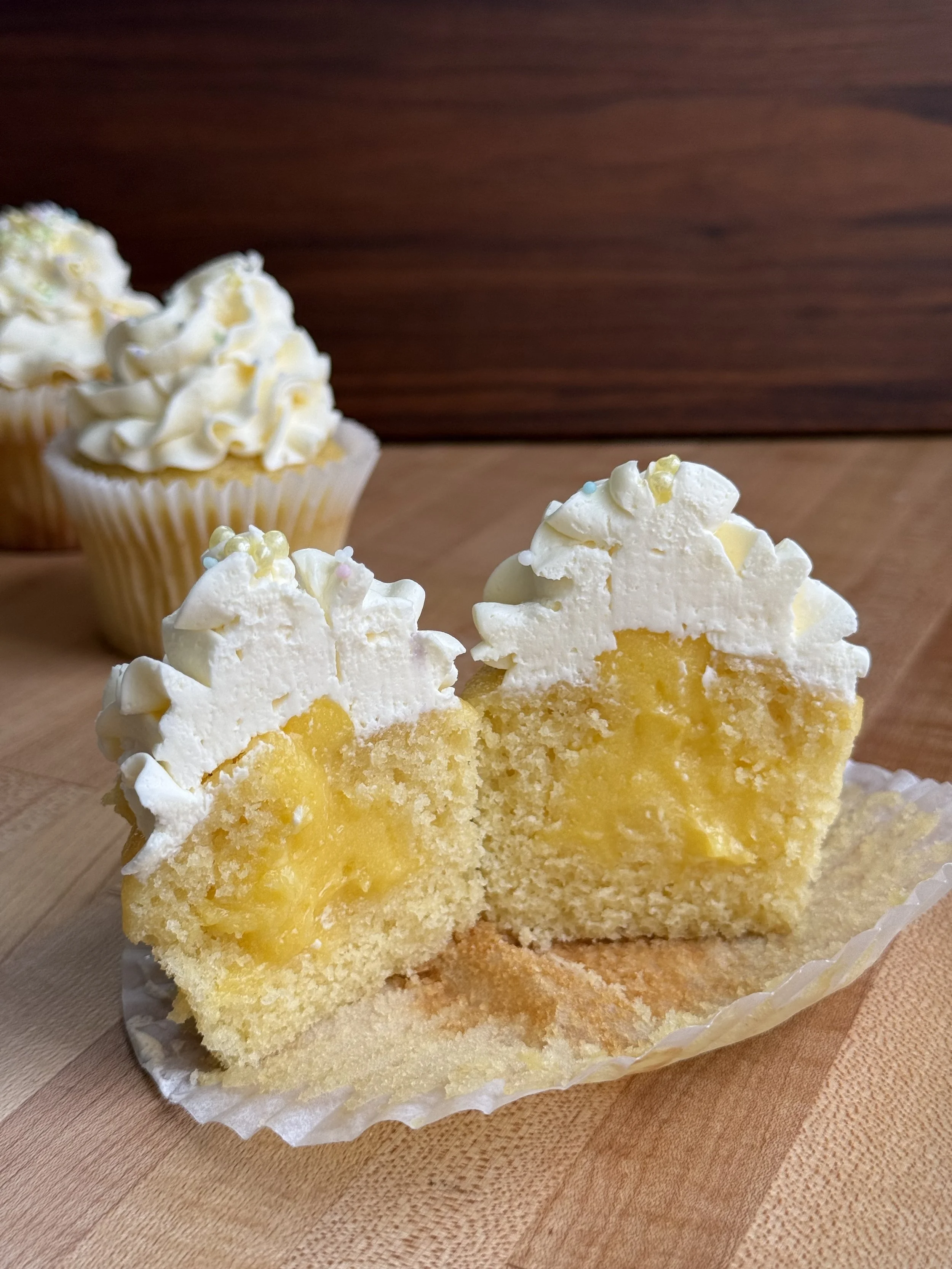
Lemon cupcakes stuffed with lemon curd and topped with lemon meringue buttercream
Lemon curd is wonderful on toast, as filling for cake and cupcakes, on top of a buttery shortbread crust to make lemon bars, as well as in a myriad of other desserts, offering that silky smooth pop of lemon flavor. If you have the right recipe, it’s really not difficult to make, either.
Lemon curd is always egg yolks, lemon zest, lemon juice, sugar, and butter. The ratios and techniques vary, but you should end up with a thick, spreadable, ultra-silky and rich lemon flavored curd.
How This Came to Be My Favorite Lemon Curd
I most often make lemon curd to fill cupcakes. My mom and I used to make cakes and cupcakes for family and friends’ events, and this lemon curd recipe was one of our staple fillings. The funny thing is, we actually had two different lemon curd recipes floating around for the longest time. We still haven’t figured out how we ended up with two and which was the original, but one day I finally decided to put them to the test: make them side by side to see which one was better.
The first recipe included 4 egg yolks and slightly more lemon juice in proportion to the amount of yolks. The recipe was straightforward, instructing to use a small saucepan, stirring continuosly until thickened. Looking at the two recipes, I figured this one would have more lemon flavor. I also liked that this one used a regular pan and didn’t require any beating.
The second recipe used 6 egg yolks and instructed to beat yolks and sugar together first, until light. It said a couple of minutes, but my yolks turned light after barely 30 seconds beating by hand with a wooden spoon, so I went with it. This recipe called for a double boiler, which I made by putting a small stainless steel bowl over a small pan of simmering water.
The winner? The second recipe. Beating the yolks resulted in a very light curd, rather than the denser, darker yellow first one. I didn’t want the beating one to win, but beating for just 30 seconds turned out to be worth it. The second recipe also made more and tasted more of lemon, possibly because the aeration from beating allows the tongue to better taste the flavors. Just a guess.
The second, winning recipe is the one I am sharing with you today. Let’s go!
This post may contain affiliate links. If you make a purchase using these links, Jennyblogs may receive a small commission, at no extra cost to you. This helps to support Jennyblogs. Where possible, links are prioritized to small businesses and ethically and responsibly made items. For further information see the privacy policy. Grazie!
Lemon Curd
Ingredients:
6 egg yolks
1 cup / 200g sugar
1/3 cup / 79g fresh lemon juice (about 4-5 lemons)
2 Tbsp grated lemon zest
1/2 cup / 113g cold unsalted butter, cut into 1/2” slices
Directions:
In the bottom of a double boiler or a medium-small saucepan, bring about 1 inch of water to a boil over medium-high heat. If using a saucepan, select a medium-small sized stainless steel or heatproof glass bowl that can fit over the saucepan without touching the water below it.
In the selected bowl, vigorously beat together yolks and sugar with a whisk until light, about 30 seconds. Whisk in lemon juice and zest.
Place bowl over simmering water, turning down heat to low. Stir continuously with a spatula or wooden spoon until mixture is thick enough to coat the back of a spoon, roughly 7-10 minutes. If in doubt, cook for a couple extra minutes, stirring all the while.
Remove from heat and stir in butter, 1 piece at a time, waiting until butter is almost melted before adding next piece.
Sieve into a heatproof bowl and place a piece of plastic wrap directly touching surface of curd to keep from forming a skin. Refrigerate until completely chilled, at least 2 hours.
Jenny’s Notes:
Lemon curd uses few ingredients and has an intense flavor, it is best to use fresh lemons for the best flavor!
Lemon curd freezes well. Place in an airtight container and freeze for up to 6 months.