Sourdough Dough Dump
/If you’ve ever seen a sourdough baker on instagram showing their clean dough dump, and suddenly started to doubt everything you know about sourdough bread, you’re not alone. These posts often claim it’s because their dough is perfectly fermented, complete with tips on how to get your dough dump like theirs.
I’m sure they mean well, but I think these kinds of posts create more problems than they are helpful. Sourdough is so much more than a clean dough dump.
I’ve made and dumped hundred of bowls of sourdough, and the dough sticks to the bowl more often than not, and most of the time the bread is just fine.
Getting a clean dough dump is GREAT. It’s super satisfying, it’s quicker than having to scrape the sides of the bowl, and the bowl is easier to clean. But it is not the foremost indicator of well-fermented, good dough.





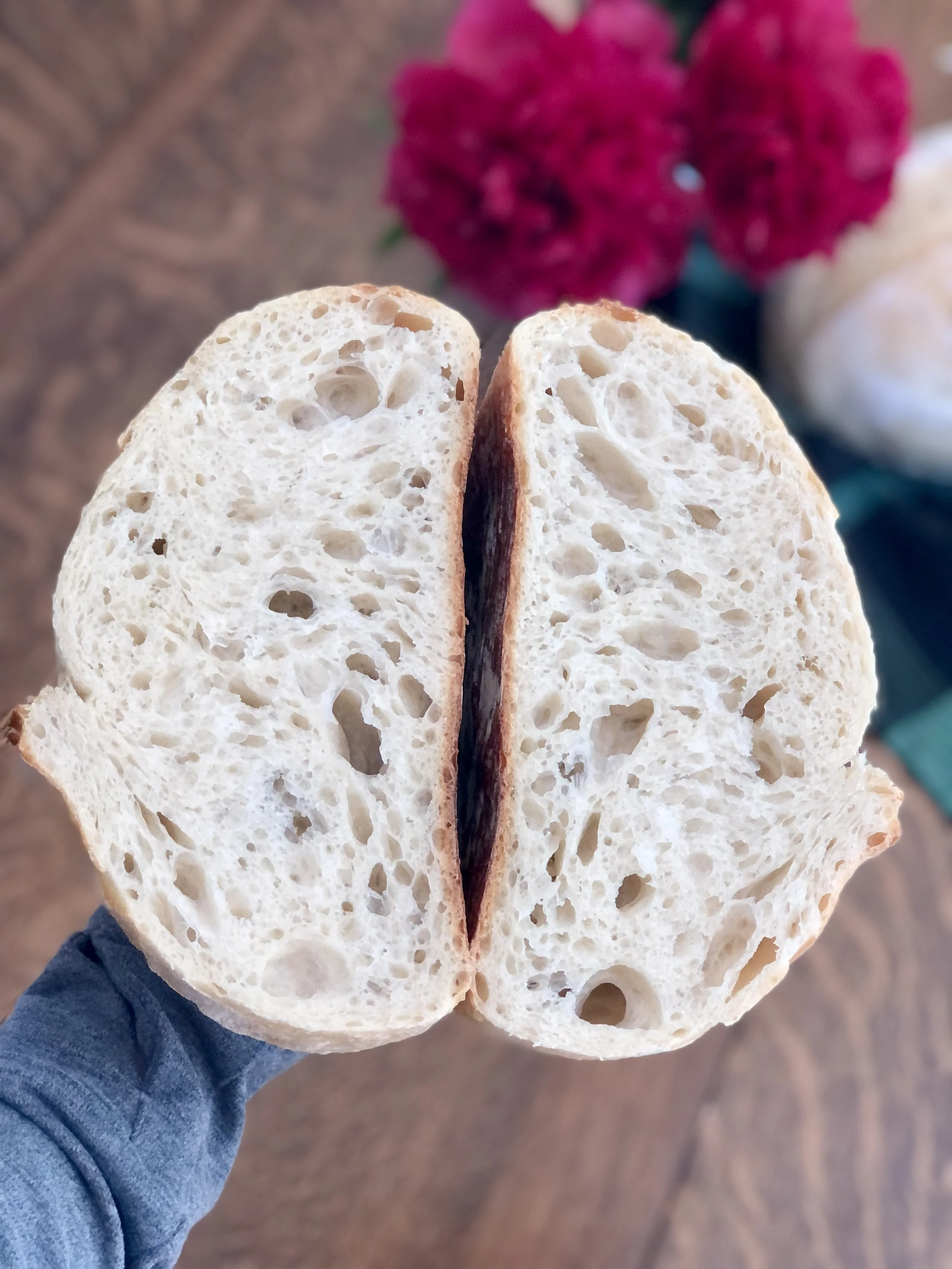
What is a dough dump?
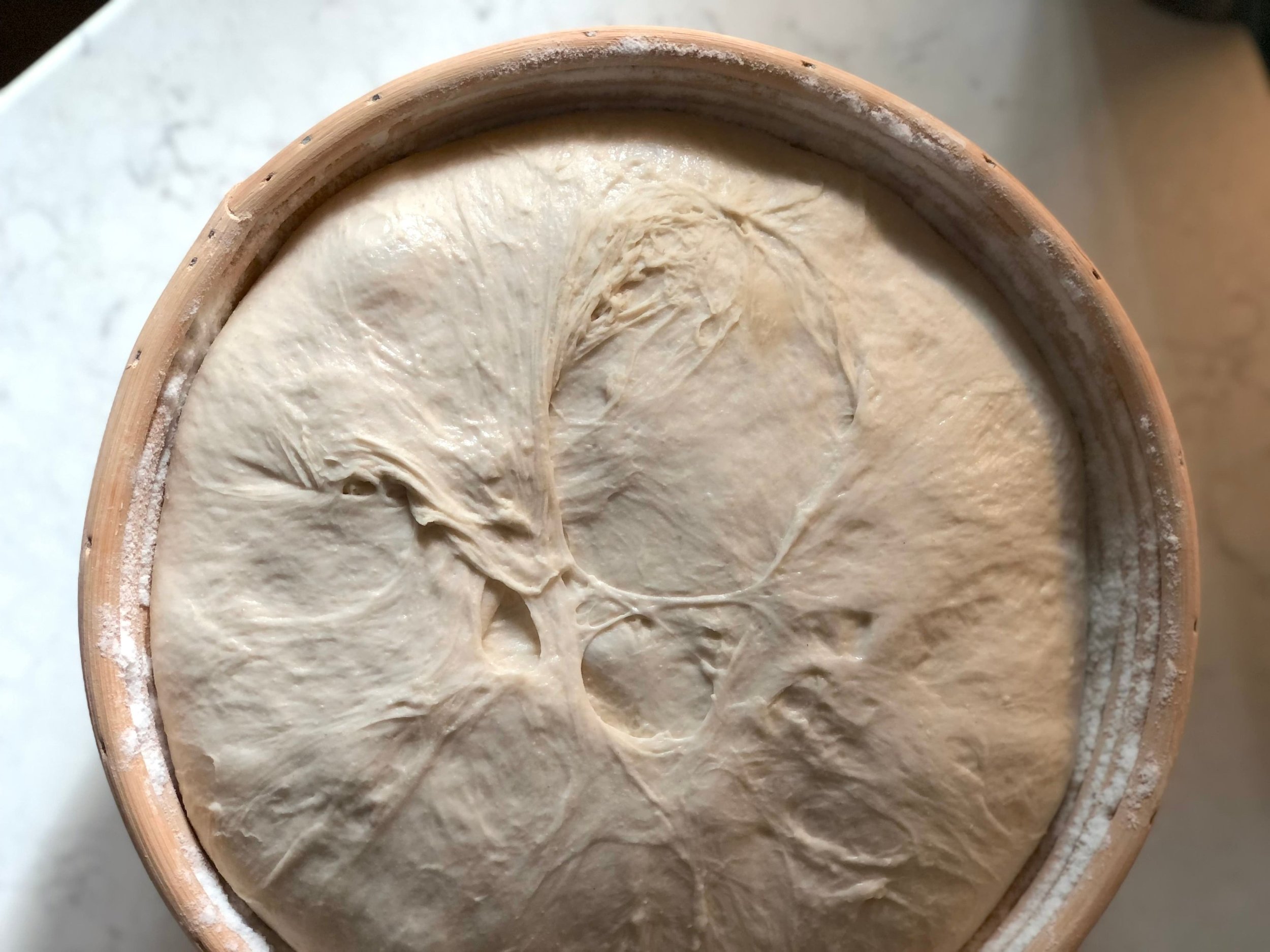
“Dough dump” is the term used to refer to dumping out a container of sourdough onto the counter, after bulk fermentation has finished. You would then go on to divide and shape your dough into its final shape.
Why is a clean dough dump desirable?
A clean dough dump is often romanticized as “the” indicator of whether your dough has finished bulk fermenting. If the dough sticks to the bowl, it’s considered either under or over fermented or various other problems. If it appears to just fall out of the bowl without sticking to it, you’ve nailed bulk ferment. Or so they say.
Why is the goal of getting a clean dough dump problematic?
A clean dough dump is one possible indication that your dough is well-fermented. If your dough dumps cleanly out of the bowl, it does not necessarily mean your dough is perfectly fermented, just the same as dough that sticks to the bowl does not necessarily mean your dough is not perfectly fermented. Someone who says that a clean dough dump is THE indicator to look for, is missing many other good indicators. Sure, it might work for them with their dough in their environment, but it is quite presumptuous to assume that what works for you in your environment will always work for everyone else in their environment. Sourdough is humbling like that. It’s possible they’re underestimating other steps in their process that get them to the point of a clean dough dump.
I’d say my dough for classic sourdough (flour, water, salt, starter) dumps cleanest when it is just slightly under-proofed. But there are so many factors that go into it, maybe I’m wrong about that. I also don’t always give my dough the time it needs to cleanly detach itself from the bowl. I admit I tend to rush it, tipping my bowl, and if it doesn’t immediately plop out, I grab my dough scraper. I’ve noticed if I just give it 5-10 seconds more, I can actually get a better picture of whether or not it will dump cleanly. Sometimes it does, it just takes a few seconds to lazily detach from the bowl. Patience is a virtue friends, one that I seem to have less of since having small children, haha. A good lesson for me, if no one else. :)
If I were to chase after a clean dough dump as the indicator that my dough is correct, I’d be very discouraged, trying to figure out what I’m doing wrong.
Why do some doughs dump out cleanly when well-fermented but others don’t?
This is a question that I still ponder periodically, as I don’t know why precisely, and I haven’t yet seen anyone that does. As mentioned above, I believe there are many factors that go into whether or not a dough will dump out cleanly, including:
dough hydration (a lower hydration dough is more likely to dump cleanly than a higher hydration dough)
gluten development - (I think this is an important one) a dough that has been worked/kneaded well up front and has strong gluten development will dump easier than a dough that was only mixed a little
humidity - high humidity can leave dough stickier and therefore more likely to stick when being dumped out
temperature of dough - a cold dough will dump out easier than a warm dough
enriched doughs are more likely to dump cleanly (my cinnamon roll dough, which is a brioche dough made with butter, almost always dumps cleanly)
a container that has been lightly oiled before placing in mixed dough may help it dump cleaner
material of bowl I suspect impacts how cleanly a dough dumps out; metal, plastic, ceramic, glass, etc.
whether or not the dough was mixed and fermented in the same bowl (if you mix and bulk ferment your dough in the same bowl, I believe this can make the dough more likely to stick vs dough that was mixed in a mixer, then transferred to a clean bowl, for example)
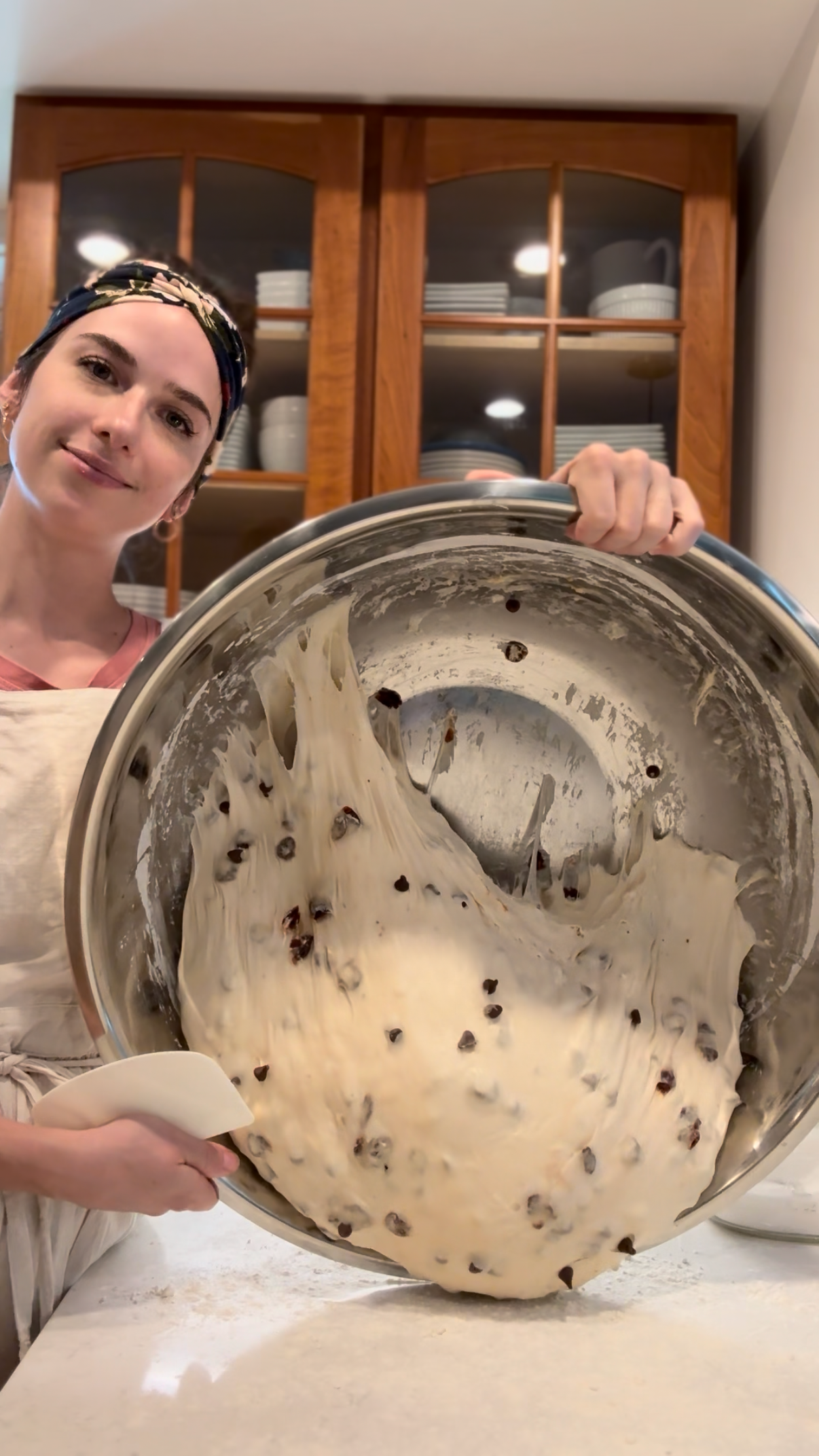
If I had a goal to get my dough to dump consistently as cleanly as possible by changing one thing, it would be to focus on optimal gluten development by kneading/working my dough for longer. I run a microbakery, so most of my bowls of sourdough are usually sizable. I do not yet own a mixer, so every bowl is mixed and kneaded by hand. If I had more time, I’m curious what kneading for longer would do. I currently aim to mix my doughs for 9-10 minutes each before later doing sets of coil folds. But I suspect 9-10 minutes for large bowls is probably not quite enough. I will be ordering a mixer soon, and I will be waiting to see if more mixing in a spiral mixer will help. When I make just 1-2 loaves during the week for personal baking and experiments, sometimes I mix a lot, other times I don’t. Perhaps I should start taking notes to see if the amount of time I knead corresponds to how the dough dumps out. :)
Of course, there are probably bakers out there who mix their dough “just until shaggy” as is popular, and still get clean dough dumps to prove me wrong, haha. Always happy to hear your thoughts in the comments!